GREEN SYNTHESIS OF SILVER NANOPARTICLES USING SHOREA TUMBUGGAIA STEM BARK
P.Venkateswarlu, S.Ankanna1, T.N.V.K.V.Prasad, E.K.Elumalai , P.C.Nagajyothi, N.Savithramma
P.Venkateswarlu1, S.Ankanna1, T.N.V.K.V.Prasad2*, E.K.Elumalai 3, P.C.Nagajyothi4, N.Savithramma1
|
| Corresponding Author: T.N.V.K.V.Prasad,Regional Agricultural Research Station, Acharya N. G. Ranga Agricultural University, Tirupathi-517502, India, E-mail: tnvkvprasad@gmail.com |
| Received: 01 October 2010 Accepted: 25 November 2010 |
| Related article at Pubmed, Scholar Google |
Abstract
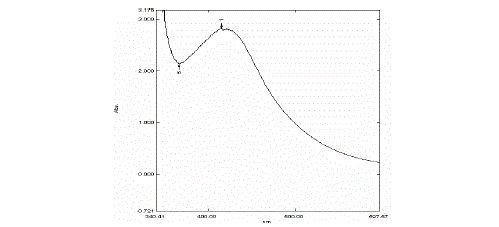
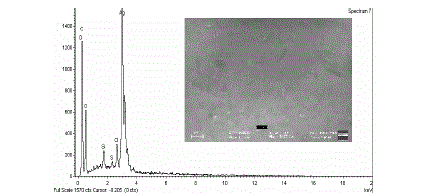
The development of dependable, environmentally benign methods for the synthesis of nanoscale materials is an important aspect of nanotechonology. In this paper, we report the synthesis of highly dispersed silver nanoparticles using a dried stem bark of Shorea tumbuggaia (An endemic plant) extract as the reducing agent. After exposing the silver ions to bark extract, rapid reduction of silver ions is observed leading to the formation of silver nanoparticles in solution. UV?VIS spectrum of the aqueous medium containing silver nanoparticles showed absorption peak at around 430 nm. Scanning electron microscopy (SEM) micrograph analysis of the silver nanoparticles indicated that they were well-dispersed and ranged in size 40 nm. The most needed outcome of this work will be the development of value-added products from Shorea tumbuggaia for biomedical and nanotechnology based industries

Open Access Journals
- Aquaculture & Veterinary Science
- Chemistry & Chemical Sciences
- Clinical Sciences
- Engineering
- General Science
- Genetics & Molecular Biology
- Health Care & Nursing
- Immunology & Microbiology
- Materials Science
- Mathematics & Physics
- Medical Sciences
- Neurology & Psychiatry
- Oncology & Cancer Science
- Pharmaceutical Sciences